
When patients think of Obstructive Sleep Apnea (OSA)—a highly dangerous condition where you physically stop breathing dozens of times an hour while asleep—they inevitably think of sleep physicians and CPAP machines. However, the very first medical professional to detect your sleep apnea is almost always your dentist.
Because OSA is fundamentally a structural collapse of the airway, the mouth holds all the clinical clues.
The Dental Clues of Suffocation
When a patient reclines in the dental chair, we perform a comprehensive head and neck exam. During this exam, a trained dentist looks for specific anatomical "red flags" that highly correlate with an obstructed airway:
- Catastrophic Enamel Wear (Bruxism): When your airway collapses during sleep, your brain panics as oxygen levels plummet. To force open the airway, the brain sends an emergency signal to your massive jaw muscles to violently thrust the lower jaw forward. This causes you to grind your teeth with immense force. Severe, flat wear on the back molars is a primary indicator of sleep apnea.
- A Scalloped Tongue: If you have a narrow jaw, your tongue doesn't have enough room to rest comfortably. During sleep, it presses aggressively against the back of your teeth, leaving distinct wavy "scallop" marks along the edges of the tongue. A large, scalloped tongue is highly likely to fall backward and block the throat when lying down.
- The High-Vaulted Palate: The roof of your mouth (the palate) is also the floor of your nasal cavity. If your palate is narrow, deep, and "V-shaped" rather than a broad "U-shape," your nasal airway is inherently restricted, making nasal breathing incredibly difficult and forcing you to heavily breathe through your mouth.
The Night Guard Trap
Many patients present with ground-down teeth and simply request a plastic night guard. However, if that patient secretly has sleep apnea, giving them a standard night guard will actually worsen their suffocation by taking up even more space in their restricted mouth.
A thorough airway screening is mandatory before treating bruxism. If OSA is suspected, your dentist will coordinate with a sleep physician. In many cases of mild-to-moderate OSA, instead of a bulky CPAP hose, the dentist can fabricate a sleek, custom Oral Appliance that gently holds the jaw forward, keeping the airway wide open all night.
Are you waking up exhausted, experiencing morning headaches, or noticing your teeth becoming flat, chipped, and sensitive? You may be suffocation in your sleep. At Órale Care in Kirkland, our comprehensive exams include rigorous airway evaluations. We don't just fix broken teeth; we look for the biological root cause. Schedule an airway and sleep screening today to protect your heart, your brain, and your smile.
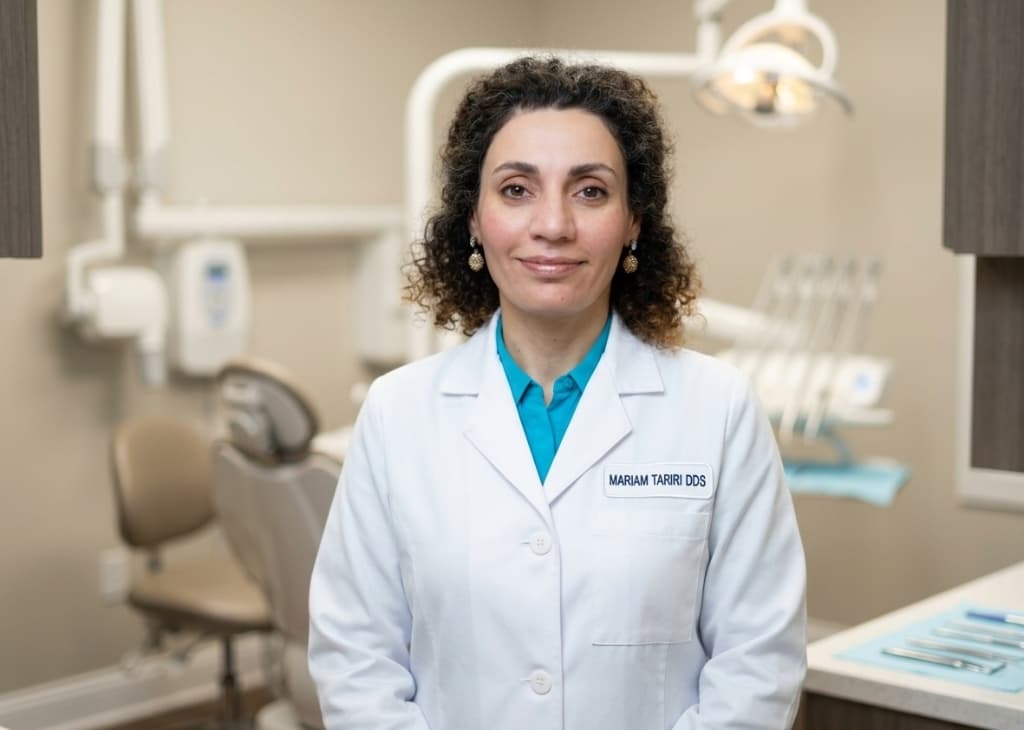
Dr. Mariam Tariri
Lead Dentist, DDS
Dr. Mariam Tariri is a graduate of the University of Washington School of Dentistry and is dedicated to providing conservative, precise dental care to the Kirkland community. She is an active member of the ADA and WSDA.
View Professional Profile →Medical Disclaimer: The information provided on the Órale Care website is for educational and informational purposes only. It is not intended as a substitute for professional dental or medical advice, diagnosis, or treatment. Always seek the advice of your dentist or other qualified healthcare provider with any questions you may have regarding a medical condition or treatment.