When patients want to completely transform the shape, color, and symmetry of their smile, they are presented with two primary cosmetic pathways: Direct Composite Bonding or Indirect Porcelain Laminate Veneers.
While both procedures aim for a stunning aesthetic outcome, they are distinct disciplines involving completely different materials, lifespans, and financial investments.
Direct Composite Bonding: The Sculptor's Approach
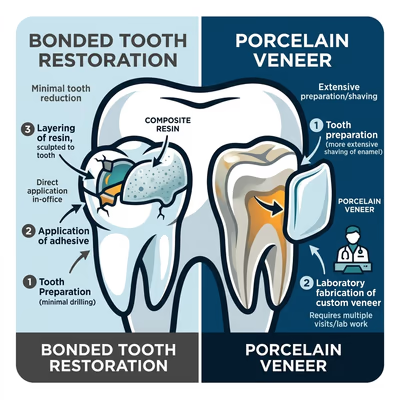
Cosmetic bonding relies on the dentist's immediate artistic skill. In a single visit, the dentist physically hand-sculpts a putty-like, tooth-colored plastic resin directly onto your natural enamel. A high-intensity blue light is used to harden the plastic, which is then polished to a shine.
The Pros:
- Hyper-Conservative: Bonding requires zero grinding or removal of your natural enamel. It is completely reversible.
- Cost & Time: Because it is completed in a single appointment and requires no laboratory fees, it is significantly cheaper than porcelain.
The Cons (The Biological Reality):
- Porosity: Composite plastic is microscopically like a sponge. Over a period of 3 to 5 years, it will inevitably absorb dark pigments from coffee, red wine, and berries, turning yellow and staining at the edges.
- Fracture Risk: Resin is inherently a softer plastic. If you bite a hard almond or use your teeth as tools, bonding is notoriously prone to chipping, requiring frequent maintenance and touch-ups.
Porcelain Laminate Veneers: The Gold Standard
A porcelain veneer is a whisper-thin shell of intensely fired ceramic, custom-fabricated by a master ceramist in a high-heat laboratory kiln. The dentist microscopically shapes the front of your tooth (removing 0.3mm to 0.5mm of enamel) to make room, and visually permanently bonds the glass onto the tooth two weeks later.
The Pros:
- Unyielding Aesthetics: Ceramic glass is completely impervious to stains. You can drink black coffee for twenty years, and the porcelain will remain exactly as white and brilliantly translucent as the day it was inserted.
- Structural Integrity: Upon massive chemical bonding to the enamel, the ceramic becomes immensely strong, routinely lasting 15 to 20 years with proper night guard wear.
The Cons:
- Irreversible: Because a micro-layer of enamel is removed, you will always need veneers on those teeth.
- Financial Investment: Master-level ceramics require intense laboratory labor, making them a premium, high-tier financial investment.
Are you overwhelmed by deciding which cosmetic pathway is structurally and financially right for your smile goals? A flawless aesthetic outcome requires meticulous planning, not guesswork. At Órale Care in Kirkland, we utilize digital smile design to blueprint your final results before we ever touch a tooth. We will transparently guide you through the exact longevities and physics of both composite and porcelain. Schedule your private cosmetic design consultation today.
Dr. Mariam Tariri
Lead Dentist, DDS
Dr. Mariam Tariri is a graduate of the University of Washington School of Dentistry and is dedicated to providing conservative, precise dental care to the Kirkland community. She is an active member of the ADA and WSDA.
View Professional Profile →Medical Disclaimer: The information provided on the Órale Care website is for educational and informational purposes only. It is not intended as a substitute for professional dental or medical advice, diagnosis, or treatment. Always seek the advice of your dentist or other qualified healthcare provider with any questions you may have regarding a medical condition or treatment.