
If you look into the mouths of most adults over the age of 40, you will likely see flash of dark gray in the back molars. Dental amalgam, commonly referred to as "silver fillings," has been the backbone of restorative dentistry for over 150 years.
Today, aesthetic composite resins (white fillings) dominate modern clinics. However, amalgam remains a subject of intense internet debate due to its elemental composition. Let's examine the clinical science regarding its safety and longevity.
The Mercury Controversy
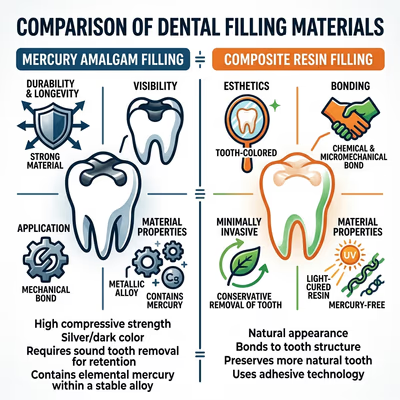
The primary concern raised against dental amalgam is its composition: it is approximately 50% elemental mercury, bound tightly with silver, tin, and copper.
Because mercury in its free, vaporized form is toxic, many patients demand the immediate removal of all their old amalgams. However, the American Dental Association (ADA) and the FDA strictly advise against the prophylactic removal of intact amalgam fillings.
Once mixed and hardened into the tooth, the mercury is chemically locked into an incredibly stable solid alloy. The amount of mercury trace vapor released during normal chewing is microscopically low—significantly less than the mercury exposure an average human receives from eating a dietary serving of ocean-caught tuna fish.
Rigorous, decades-long studies by global health organizations consistently confirm there is zero credible link between intact dental amalgam fillings and systemic or neurological diseases in the general population. In fact, needlessly drilling out a perfectly sealed, functional amalgam filling releases far more mercury vapor into the patient's airway (and destroys more healthy tooth structure) than simply leaving it in peace.
The Longevity Argument
While composite resin is undeniably more beautiful, amalgam remains a mechanical triumph.
Clinical data confirms that amalgam routinely outlasts composite resin, particularly in large molars that endure 200 pounds of chewing force. While a white filling might last 7-10 years before the margins leak, a properly placed amalgam can easily last 15, 20, or even 30 years. Amalgam possesses a unique, almost magical property: as it corrodes slightly over decades in the saliva, the corrosion byproducts physically seal the microscopic gaps between the filling and the tooth, creating a self-sealing margin that intensely resists new decay.
At Órale Care, we almost exclusively place aesthetic composite resins and advanced ceramics for new restorations. However, if you possess 20-year-old amalgam fillings that are structurally sound and asymptomatic, science strongly dictates leaving them undisturbed to perform their job for decades to come.
Are you concerned about the dark fillings in your back teeth, or unsure if an old restoration is failing or simply discolored? Never drill out a functional filling based on internet fear-mongering. At Órale Care in Kirkland, our doctors evaluate every restoration objectively using high-definition transillumination and digital sensors to confirm its structural integrity. Schedule a personalized restorative evaluation today.

Dr. Mariam Tariri
Lead Dentist, DDS
Dr. Mariam Tariri is a graduate of the University of Washington School of Dentistry and is dedicated to providing conservative, precise dental care to the Kirkland community. She is an active member of the ADA and WSDA.
View Professional Profile →Medical Disclaimer: The information provided on the Órale Care website is for educational and informational purposes only. It is not intended as a substitute for professional dental or medical advice, diagnosis, or treatment. Always seek the advice of your dentist or other qualified healthcare provider with any questions you may have regarding a medical condition or treatment.